| Article at a Glance This guide covers the five-stage decomposition process and why timing is critical, the health pathogens released by decaying animals, a data comparison of DIY vs professional removal, and a location-by-property-type breakdown for Melbourne’s older homes. Two contextual references link to specialist same-day dead animal removal in Northcote for readers in Melbourne’s inner north. |
The Problem Nobody Wants to Talk About
It usually starts with a smell you cannot quite place. Faint at first, then stronger. You clean the kitchen, check the bins, open windows — and it is still there. A few days later, flies are gathering near a cornice or a skirting board. That is when most homeowners in Melbourne realise what they are dealing with.
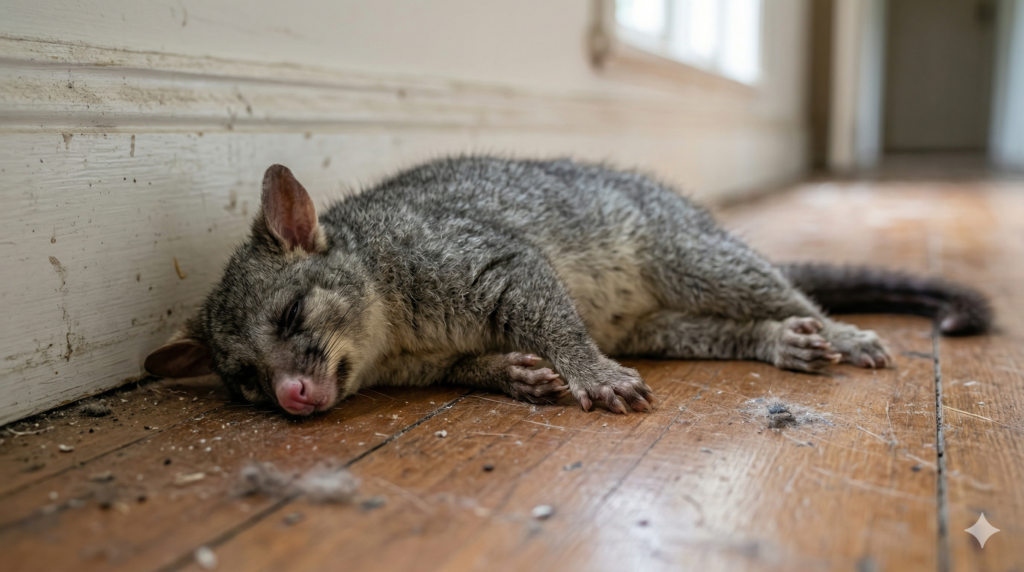
It happens far more often than most people think, particularly across Melbourne’s inner northern and western suburbs where Victorian-era housing stock and urban wildlife corridors create conditions that push possums, rats, mice and birds into roof cavities, wall spaces and subfloors on a routine basis.
This guide breaks down everything you need to know: how decomposition works, what the real health risks are, how long the smell lasts, and why same-day professional removal is almost always the smarter call.
Why Inner Melbourne Properties Are Particularly Vulnerable
Not every property has the same dead animal risk profile. Melbourne’s inner suburbs carry a disproportionately high number of dead animal removal callouts for a combination of reasons that are worth understanding.
Older Housing Stock
Suburbs including Northcote, Fitzroy, Brunswick, Collingwood, Richmond and Footscray were developed heavily between the 1880s and 1930s. The Victorian and Edwardian terrace homes, weatherboard cottages and workers’ housing that dominate these areas were built without the sealed roof eaves, concrete slab subfloors and modern pest-proofing that newer construction uses.
Original timber fascia boards warp and split over time. Lead flashing deteriorates. Brick mortar erodes. The result is that every one of these properties has multiple unintentional entry points that wildlife — particularly brushtail possums, common rats and house mice — exploit regularly.
Urban Wildlife Corridors
The Merri Creek, Yarra River, and the interconnected parks and railway corridor vegetation that runs through Melbourne’s inner north create a network of wildlife movement routes. Brushtail possums, in particular, move along these corridors into residential streets and rooftops. The possum is a native protected species in Victoria, which means residents cannot trap or harm them. They will return to the same rooftop repeatedly unless entry points are sealed. When one dies in a roof cavity — which does happen, particularly in older or frail animals — the call for removal typically comes within 24 to 48 hours as the smell fills the house.
The Rat-Baiting Cycle in Dense Suburbs
Melbourne’s inner suburbs have a well-documented urban rat problem, driven in large part by food waste from the dense concentration of restaurants, cafes and hospitality venues on strips such as High Street in Northcote, Smith Street in Collingwood, and Sydney Road in Brunswick.
Many homeowners and council pest management programs use rodenticide baits to control rat populations. Baiting is effective, but it has a consequence that pest managers refer to as the ‘die-off problem’: rodents that consume a lethal dose of bait typically retreat into the darkest, warmest, most inaccessible space they can find before dying. In practice, that means wall cavities, insulated roof spaces and timber subfloors. The smell arrives within 24 to 48 hours and can persist for weeks.
How Long Will the Smell Last? A Data Breakdown
One of the most common questions homeowners ask when they suspect a dead animal is how long the odour will last. The answer depends on three variables: the size of the animal, the location where it died, and ambient temperature.
Infographic 1: Dead Animal Odour Timeline by Species and Location
Table 1 — Estimated smell duration by animal type (based on industry data from Melbourne pest control operators, 2023–2025)
| Animal Type | Smell Onset | Peak Intensity | Duration (untreated) |
| Mouse / Small Rodent | 12–24 hours | Days 3–7 | 1–2 weeks |
| Rat (medium rodent) | 24–48 hours | Days 4–10 | 2–4 weeks |
| Possum / Large Animal | 24–48 hours | Days 5–14 | 3–6 weeks |
| Bird (small) | 24 hours | Days 2–5 | 1–2 weeks |
Temperature is a significant amplifier. A dead possum in a Northcote terrace roof during a Melbourne summer — where uninsulated tin roof spaces can reach 50–60°C on hot days — will decompose and produce maximum odour intensity within 24 hours. The same animal in a cool, insulated subfloor during winter may take five to seven days to reach peak odour but will maintain that odour for significantly longer due to the slower drying process.
Location also determines how strongly the smell presents inside the home:
- Roof cavities with no insulation: smell travels fast and fills the house quickly, but the carcass is often easier to locate.
- Roof cavities with fibreglass batts: insulation absorbs odour compounds and releases them slowly, extending the smell duration even after the carcass is removed.
- Wall cavities: the smell is concentrated and often appears to move as temperature changes. Very difficult to locate by smell alone.
- Timber subfloors: low airflow means slower decomposition but a very long-lasting low-level odour that builds over time.
- Chimney stacks: smell comes directly down through the firebox into a room — typically one of the fastest-presenting odour scenarios in older homes.
The Genuine Health Risks — Not Just the Smell
The unpleasant odour is the symptom that drives homeowners to act. But it is the underlying health risks that make prompt removal genuinely important, particularly in households with young children, elderly residents, or anyone with respiratory conditions.
Infographic 2: Health Hazards of Decomposing Animals in the Home
Table 2 — Key pathogens and risks associated with decomposing animals in residential settings
| Pathogen / Risk | Source | How It Spreads | Symptoms |
| Salmonella | Rodents, birds | Contact with carcass or contaminated surfaces | Fever, diarrhoea, cramps |
| Leptospirosis | Rats (via urine/fluids) | Skin contact with decomposition fluids | Fever, muscle pain, kidney damage |
| Hantavirus | Rodents | Inhaled particles from droppings/carcass | Respiratory distress, fever |
| E. coli | Various animals | Contact, airborne particles | Gastrointestinal illness |
| Secondary fly infestation | Blowflies attracted to carcass | Larvae spread through home | Contamination of food/surfaces |
Airborne Hazards
As a carcass decomposes, the gases released — including hydrogen sulphide, methane, ammonia and a range of volatile organic compounds — are not merely odorous. At sufficient concentrations in confined, poorly ventilated spaces such as wall cavities and uninsulated roof voids, they can cause headaches, nausea and respiratory irritation. Switching on ducted heating or air conditioning while a decomposing animal is in the roof or subfloor will actively circulate these gases through the entire property.
Secondary Pest Cascades
A decomposing animal is an active resource that draws secondary pests in succession. Blowflies are typically the first to arrive, sometimes within hours of death, laying eggs that produce maggots. After flies, carrion beetles and other scavenging insects follow. These secondary pest populations do not remain at the carcass — they spread throughout the property. If the original problem is a rat or possum, the remaining live rodents in the same infestation are now also disturbed and may become more active in the main house. This is a common pattern: homeowners call for dead animal removal and discover a much larger active pest problem underneath it.
Structural Contamination
Decomposition fluids — the liquids released as soft tissue breaks down — will soak into whatever surface the carcass is resting on. In Melbourne’s older homes, that typically means original timber floor joists, fibreglass insulation batts, old horsehair plaster, or heritage hardwood floorboards. These materials absorb the fluids readily and are difficult or impossible to fully deodorise without professional-grade products. Contamination can also wick into plasterboard ceiling sheeting and cause staining that becomes visible from inside the house, or seep under original floorboards and persist in the subfloor for months.
Where Dead Animals Are Found: A Property Type Breakdown
Understanding where to search is half the problem in dead animal removal. Different property types have different typical locations, and Melbourne’s older housing stock presents some specific challenges that do not apply in newer construction.
Infographic 3: Dead Animal Locations by Melbourne Property Type
Table 3 — Common carcass locations by property type across Melbourne’s inner suburbs
| Property Type | Most Common Location | Typical Animal |
| Victorian / Edwardian terrace | Roof cavity, wall cavity | Possum, rat |
| Weatherboard cottage | Original subfloor, subfloor joists | Rat, mouse |
| Pre-1950 brick home with chimney | Chimney stack, firebox surround | Starling, sparrow, pigeon |
| Converted workers cottage | Wall cavity (no insulation) | Rat, mouse |
| 1960s–80s brick veneer | Roof space near eaves | Possum, rat |
Chimneys deserve specific mention because they are a Northcote and inner-north phenomenon that is often missed. Homes built before 1950 typically have one or more original brick chimneys. Starlings, sparrows and pigeons regularly enter through uncapped chimney stacks, particularly during nesting season (July to December). When one falls and cannot escape, it dies inside the chimney. The smell presents directly into the room at fireplace level and is often mistaken for a wall cavity issue. Any home with an original chimney and a smell concentrated near the fireplace should have the chimney inspected as a first priority.
DIY vs Professional Removal: An Honest Comparison
Many homeowners will attempt to find and remove a dead animal themselves before calling a professional. There are situations where that works — a visible carcass in a backyard or accessible under-deck space is relatively straightforward if you have the right PPE. But the typical inner Melbourne scenario involves an animal that cannot be seen, in a space most homeowners have never entered.
Infographic 4: DIY vs Professional Dead Animal Removal — Side-by-Side Comparison
Table 4 — DIY vs professional removal across six key factors
| Factor | DIY Removal | Professional Removal |
| Location accuracy | Often guesswork — smell can mislead | Systematic odour tracking to exact source |
| Health protection | Risk of pathogen exposure without proper PPE | Full PPE, sealed bags, compliant disposal |
| Odour treatment | Limited — household products do not neutralise decomp gases | Commercial-grade sanitisers and neutralisers |
| Secondary pests | Maggots and flies often remain untreated | Insecticide applied to larvae after removal |
| Time on site | Hours to days searching | Typically resolved in a single visit |
| Follow-up prevention | No guidance on entry points or infestation | Entry-point identification and pest control advice |
When DIY Is Reasonable
If you can see the animal, if it is in an open accessible location, and if you have heavy-duty gloves, a P2 respirator mask, sealed disposal bags and a disinfectant suitable for biological contamination, DIY removal is a legitimate option. This most commonly applies to animals found in open garden areas, under accessible decking with good clearance, or in a garage or shed.
When to Call a Professional Immediately
The list below reflects situations where DIY is not a realistic option without specialist equipment or training:
- The smell is present but the animal cannot be located after a reasonable search.
- The smell is coming from a wall cavity with no access point.
- The property has a roof cavity accessible only through a small hatch and you have no experience working in roof spaces.
- There is heavy fly activity with no visible source — maggots are already established.
- The smell has been present for more than a week and has not diminished.
- The house has a small child, elderly resident or immunocompromised person in residence.
- You have a Northcote or inner-north terrace with original Victorian or Edwardian construction and no experience with the subfloor or roof void.
What a Professional Dead Animal Removal Service Actually Does
The process that separates a professional service from simply picking up a carcass and leaving is important to understand, both for knowing what to expect and for evaluating whether a given operator is doing the job properly.
Step 1 — Systematic Search, Not Guesswork
An experienced technician tracks the odour gradient rather than randomly opening access points. The strongest concentration of smell, combined with fly activity patterns and any visible ceiling staining, narrows the search zone considerably. In a Victorian terrace with three possible locations (roof, wall, subfloor), an experienced operator will typically have the carcass located within 20 to 30 minutes.
Step 2 — Safe Extraction with Full PPE
This means a minimum of heavy-duty nitrile gloves, a properly fitted P2 respirator, disposable coveralls, and sealed biohazard bags for the carcass and any heavily contaminated material. Any operator not using full PPE is creating unnecessary exposure risk for themselves and potentially cross-contaminating other areas of your property.
Step 3 — Larval Treatment
Removing the carcass stops the odour source, but it does not deal with any fly eggs or larvae already established at the site. A commercial-grade insecticide treatment applied to the area around where the carcass was found prevents a secondary fly emergence over the following days — a problem that DIY removal commonly misses entirely.
Step 4 — Odour Neutralisation and Sanitation
Household cleaning products and air fresheners do not neutralise the specific volatile organic compounds produced by decomposition. Professional operators use enzyme-based or commercial chemical neutralisers that break down the odour compounds at a molecular level. In a tightly insulated roof space or a carpet-over-timber subfloor, this step is the difference between a home that smells normal within a day and one that retains a residual odour for weeks.
Step 5 — Root Cause Identification
A dead animal is a symptom. The cause is an active pest population in the property or an unsealed entry point that will produce the same problem again. Any professional removal service worth using will identify the entry points used by the animal and discuss options for closing them. In many cases this means a follow-up rodent control program, possum-proofing of eave gaps and roof vents, or chimney capping. Addressing only the symptom without the cause means the same call is likely within weeks or months.
Frequently Asked Questions
How do I know for certain it is a dead animal and not a gas leak or sewage issue?
Dead animal odour has a distinct sweet-rotten or sour quality that differs from sewage gas (which is more sulphurous and hydrogen sulphide-dominant) and from mould (which is earthy and damp). The presence of concentrated fly activity in one specific area of the house is a strong confirmatory sign. A persistent smell that gets worse on warm days and is fixed to a specific location rather than moving around the house is also characteristic.
Is the smell dangerous to breathe?
The gases produced by decomposition are not acutely toxic at the concentrations normally encountered in residential settings. However, they are respiratory irritants, and in poorly ventilated confined spaces — such as inside a roof void during a search — concentrations can be hazardous. People with asthma, COPD or other respiratory conditions should avoid entering the affected area. The bacteria and parasites associated with a carcass are a more significant health concern than the gases themselves.
Why does the smell seem to come and go, or appear to move around the house?
Temperature drives this behaviour. As the house warms up during the day, decomposition gases expand and find pressure equalisation pathways — through ceiling cornices, down light fittings, through gaps around pipes and cables. This is why the smell often seems strongest when the heating comes on, or when a particular room heats up in the afternoon sun. It does not mean the carcass is moving; it means gas pathways are responding to temperature.
Can I just leave it and let it dry out?
Some homeowners are advised, or assume, that the animal will eventually desiccate and the smell will stop on its own. This is partially true — the smell will eventually diminish as decomposition completes — but the timeline is significantly longer than most people realise (see Table 1), and the health and contamination risks do not wait for desiccation to complete. The secondary pest cascade, fluid contamination of building materials, and bacteria risk are all active throughout the process.
My property is a Northcote Victorian terrace. Where should I check first?
Based on the call patterns of Melbourne pest operators, the roof cavity is the most likely location in a single-storey Northcote terrace, followed by the chimney if the property has an original fireplace. The subfloor is a close third. If you are in Northcote’s inner-north and need same-day help, Swift Pest Control’s dead animal removal in Northcote offers local specialist service with same-day attendance and full odour treatment included.
Prevention: Reducing the Risk of a Repeat Incident
Once you have dealt with a dead animal removal, the priority shifts to ensuring the same entry points and pest conditions do not produce the same problem again within weeks or months.
Seal Roof Entry Points
Brushtail possums and rats access Melbourne roof spaces through gaps at the eaves, damaged or missing ventilation tiles, deteriorated lead flashing, and split timber fascia boards. A post-removal inspection should identify every current entry point. Mesh, steel wool packed into gaps, purpose-built possum excluders, and re-bedding of ridge tiles are all appropriate depending on the specific entry mechanism.
Cap or Screen Chimneys
For properties in Northcote and surrounds with original pre-1950 chimneys, a stainless steel chimney cap or bird-mesh screen fitted to the top of the flue stack will prevent birds from entering. This is a low-cost, permanent solution to a problem that otherwise recurs every nesting season.
Address Active Rodent Populations Properly
Rodenticide baiting without an external bait station strategy pushes dying rats into inaccessible internal spaces. The preferred professional approach uses external tamper-proof bait stations positioned to encourage rodents to consume bait and die outdoors rather than inside the building. If you have an active rat problem and are currently baiting internally, discuss bait placement strategy with your pest manager before the next baiting cycle.
Schedule Regular Roof Void Inspections
Homeowners in Melbourne’s older inner suburbs would benefit from a professional roof cavity inspection every two to three years. Inspections typically identify new possum entry points, signs of rodent activity, disturbed insulation and preliminary indicators of other pest activity before they become an odour or damage problem. The cost of a routine inspection is a fraction of an emergency dead animal removal plus the follow-up pest control that typically follows.
Final Word: Timing Is Everything
The consistent theme running through every aspect of dead animal removal — odour duration, health risk, structural contamination, secondary pest activity — is that the earlier the carcass is removed, the better the outcome across every dimension.
A mouse removed within 24 hours causes minimal contamination and very little residual odour. The same mouse, left for two weeks, will have established a secondary fly population, contaminated surrounding timber, and permeated insulation with odour compounds that take weeks to fully dissipate even after removal. The cost differential between early and late removal is substantial — not just in the service fee, but in the follow-on treatment, potential structural remediation, and the extended disruption to the household.
For Melbourne homeowners in the inner north, specialist services like dead animal removal in Northcote are available on a same-day basis precisely because the pest industry understands that the 24-to-48-hour window after detection is when professional intervention delivers the greatest value.
If you can smell it, the clock is already running. Act within that first day.